


Vaping in the UK has changed more in the past 12 months than in any period since e-cigarettes first arrived on British high streets. The June 2025 disposable vape ban reshaped the market overnight. The Tobacco and Vapes Bill cleared Parliament in April 2026. And a new Vaping Products Duty of £2.20 per 10ml takes effect on 1 October 2026. If you smoke, or if you already vape and want to get more from it, the landscape can feel confusing.
This guide cuts through the noise. We've compiled everything you need to know about vaping in the UK in 2026 — what it is, how it works, which devices suit which vapers, how to choose your e-liquid and nicotine strength, and exactly what the law says. It's written for adults who currently smoke or vape. Everything is based on the latest evidence from the NHS, Action on Smoking and Health (ASH), and the Office for Health Improvement and Disparities (OHID).
📋 In this guide:
- What is vaping and how does it work?
- Vaping vs smoking — what does the evidence say?
- Types of vape device explained
- E-liquid: PG, VG, flavours and choosing wisely
- Choosing the right nicotine strength
- Post-ban: switching from disposables
- UK vaping laws and regulations 2026
- How much does vaping cost in 2026?
- Common beginner mistakes and how to avoid them
- Frequently asked questions
1. What Is Vaping and How Does It Work?
Vaping is the act of inhaling an aerosol produced by an electronic device. Unlike cigarettes, which burn tobacco at over 600°C to produce smoke, a vape heats a liquid — called e-liquid or vape juice — to around 200°C, converting it into a vapour that you inhale. There is no combustion. No tobacco. No tar. No carbon monoxide.
Every vape device, regardless of shape or price point, has four core components: a battery to power the device, a coil (the resistance heating element), a tank or pod to hold the e-liquid, and a mouthpiece. When you inhale or press a button, the battery activates the coil, which heats the e-liquid and creates the aerosol you breathe in.
How a vape device works — the four key components. Sources: MHRA, TRPR 2016.
2. Vaping vs Smoking — What Does the Evidence Say?
This is the most important question, and the answer matters for anyone considering switching. The UK's leading health bodies have reviewed the international evidence extensively.
The NHS states clearly that e-cigarettes are "far less harmful than cigarettes" and can help people quit smoking for good.[1] The Office for Health Improvement and Disparities (OHID), in its widely cited 2022 evidence review, found that "in the short and medium term, vaping poses a small fraction of the risks of smoking."[2]
It is essential to be clear about what this means in practice. When you smoke a cigarette, tobacco burns at high temperature, producing over 7,000 chemicals — including at least 70 known carcinogens, along with tar and carbon monoxide that directly damage the lungs and cardiovascular system. A vape does not burn anything. The aerosol it produces contains significantly fewer of those harmful chemicals, and at much lower levels.
⚠ What the evidence also says: Vaping is not risk-free. It has not been around long enough to know its long-term effects with certainty. Non-smokers and people who have never smoked should not take up vaping. It is a harm-reduction tool for adult smokers — not a lifestyle product. The NHS advises that if you do not smoke, do not start vaping.
One of the most widely misunderstood facts is about perception versus reality. According to ASH's 2025 Smokefree Great Britain survey, 53% of people who smoke incorrectly believe vaping is as harmful as, or more harmful than, smoking.[3] This misperception is a serious public health concern, because it may be deterring smokers from switching to a significantly less harmful alternative.
On quitting smoking specifically: a 2021 Cochrane review, referenced by the NHS, found that people who used e-cigarettes to quit smoking — alongside expert support — were up to twice as likely to succeed compared to those who used other nicotine replacement products such as patches or gum.[4]
If you want to quit smoking, the most effective approach combines vaping with support from the NHS Stop Smoking Services. Visit NHS Better Health for free local support.
3. Types of Vape Device Explained
With disposables now banned, the UK market in 2026 is firmly focused on rechargeable, refillable devices. There are four main categories, each suited to different vapers.
Pod Kits (Recommended for beginners)
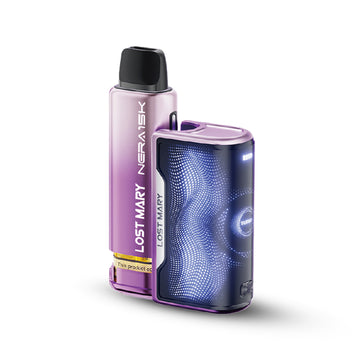
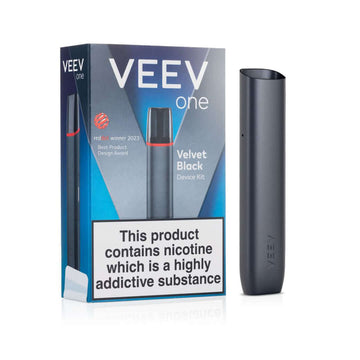
Pod kits are compact, lightweight devices that use replaceable or refillable pods instead of traditional tanks. They are the most popular device type in the UK and our top recommendation for anyone switching from cigarettes or disposables. They typically use mouth-to-lung (MTL) inhalation — drawing on a vape exactly as you would a cigarette — which makes the transition from smoking feel natural.
Pod kits pair perfectly with nicotine salt e-liquids (nic salts), which deliver nicotine more smoothly and quickly than traditional freebase nicotine. For this reason, they are the preferred device type for anyone switching from cigarettes who wants a satisfying nicotine hit without harshness.
💡 Pod kits at 888Vapour:
We stock a range of pod kits to suit every budget and preference, from entry-level starter kits to premium devices with adjustable airflow and wattage. Browse pod kits →
Prefilled Pod Kits
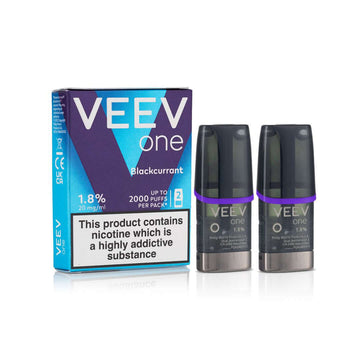
Prefilled pod kits use sealed, pre-loaded pods rather than e-liquid bottles. You simply click in a new pod when the old one runs out — there is no filling, no mess, and minimal maintenance. Brands such as OXVA, Vaporesso, and IVG have popular prefilled systems. These are ideal for people who want maximum simplicity or who are constantly on the go.
The trade-off is cost: prefilled pods are slightly more expensive per ml than bottled e-liquid, and you are limited to the flavours available in your pod system. See our guide to the best prefilled pod kits →
Vape Pen Kits
Vape pens are slim, cylindrical devices — longer and narrower than pod kits. They typically use a traditional 510-thread tank and coil system and suit vapers who prefer a slightly larger device with more e-liquid capacity. They generally deliver a slightly more open draw than pod kits and work well with both nic salts and shortfill e-liquids.
Box Mods (For experienced vapers)
Box mods are larger, box-shaped devices with variable wattage controls, larger screens, and often replaceable 18650 or 21700 batteries. They are aimed at experienced vapers who want maximum power, cloud production, and customisability. They are not recommended for beginners — they require more knowledge to use safely, particularly around battery safety and coil resistance. They pair with high-VG shortfill e-liquids at lower nicotine strengths. Read our advanced mod guide →
| Device Type | Best For | E-Liquid | Maintenance |
|---|---|---|---|
| Pod Kit | Beginners, switchers | Nic salts (10–20mg) | Low — refill pod, change coil |
| Prefilled Pod Kit | Maximum simplicity | Sealed prefilled pods | Very low — just swap pods |
| Vape Pen | Intermediate vapers | Nic salts or freebase | Medium — refill tank, change coil |
| Box Mod | Experienced vapers | Shortfill / high-VG freebase | Higher — battery, coil, tank |
4. E-Liquid: PG, VG, Flavours and Choosing Wisely
E-liquid (also called vape juice) is the solution your device turns into vapour. Every UK-compliant e-liquid is made from the same four base ingredients: Propylene Glycol (PG), Vegetable Glycerine (VG), flavourings, and optionally, nicotine.
PG vs VG — what's the difference?
PG is a thin, odourless liquid that carries flavour well and produces a tighter throat hit. It is the dominant ingredient in nic salts and most 50/50 blends. VG is a thicker, slightly sweet liquid that produces larger clouds and a smoother inhale. High-VG blends (70/30 or above) are designed for sub-ohm or box mod vaping.
For beginners and pod kits, a 50/50 PG/VG blend is ideal. It flows well through the small wicking ports of pod coils and delivers satisfying flavour and throat hit. Read our full PG vs VG guide →
Nic Salts vs Freebase Nicotine
There are two forms of nicotine used in e-liquids. Freebase nicotine is the traditional form — it absorbs more slowly and can feel harsh at higher strengths. Nicotine salts (nic salts) use benzoic acid to create a smoother, faster-absorbing nicotine that closely mimics the nicotine hit of a cigarette. For this reason, nic salts have become the dominant format in the UK market, particularly among smokers switching to vaping.
According to ASH's 2025 data, nic salts are the most popular e-liquid type among UK adult vapers.[3] Full guide: Nic salts vs freebase →
Shortfill E-Liquids
Shortfills are larger bottles of nicotine-free e-liquid — typically 50ml or 100ml — with space left at the top to add a separate nicotine shot (nic shot). This format exists because UK TPD law restricts nicotine-containing e-liquid to 10ml bottles, but has no restriction on nicotine-free liquid. Shortfills allow high-VG vapers using box mods to buy larger volumes at lower per-ml cost. Be aware: from October 2026, the Vaping Products Duty will apply to shortfills, significantly increasing their price. Best shortfill e-liquids 2026 →
Bar Salts — the disposable replacement
Bar salts are 10ml nic salt e-liquids formulated to replicate the flavour profiles that made disposable vapes popular — strong, fruity, icy flavours with smooth nicotine delivery. They are designed to be used in pod kits and have become one of the most searched-for product categories following the disposable ban. Our top-rated bar salts →
5. Choosing the Right Nicotine Strength
Getting the nicotine strength right is arguably the most important decision a new vaper makes. Too low, and you will not satisfy cravings and may return to cigarettes. Too high, and the vape may feel too harsh, or you may consume more nicotine than you need. The correct strength depends primarily on how heavily you currently smoke.
Nicotine strength guide for adult smokers switching to vaping. These are general guidelines only. Source: NHS / MHRA guidelines.
One important point: nicotine delivery from vaping is slower and different in character to a cigarette. Initially, some switchers feel they are not getting enough nicotine — this usually means either the strength is too low, or they need to puff more frequently in the first few days. This adjustment period typically lasts one to two weeks. Full nicotine strength guide →
6. Post-Ban: Switching from Disposables
The single-use disposable vape ban came into effect across the UK on 1 June 2025. It covers all four nations — England, Scotland, Wales, and Northern Ireland — under separate but equivalent legislation.[5] Products that cannot be recharged, refilled, or have their coil replaced are now illegal to sell or supply.
This affects millions of vapers who relied on disposables for their convenience. The good news: modern pod kits and prefilled pod systems have been specifically designed to fill this gap, offering comparable simplicity with a rechargeable, refillable format that is fully legal, more cost-effective, and significantly less wasteful.
✅ The best disposable replacements in 2026:
- Prefilled pod kits — closest to the disposable experience. Swap pods, not devices.
- Refillable pod kits + bar salts — fill from a 10ml bottle, more e-liquid choice, lower cost per ml.
- Both options are fully legal, MHRA-registered, and TPD-compliant.
7. UK Vaping Laws and Regulations 2026
The UK has some of the most detailed vaping regulations in the world. Understanding them helps you buy with confidence and vape responsibly.
The Tobacco and Related Products Regulations 2016 (TRPR / TPD)
These are the core product safety regulations for the UK vaping market, derived from the EU's Tobacco Products Directive and retained in UK law after Brexit. They set the standards every product on the 888Vapour shelves must meet:
- Maximum nicotine strength: 20mg/ml (2%)
- Maximum tank and pod capacity: 2ml
- Maximum nicotine-containing e-liquid bottle size: 10ml
- All products must be registered with the MHRA before sale
- Child-resistant packaging required on all nicotine products
- Advertising restrictions: no TV, radio, or print advertising
The Disposable Vape Ban (June 2025)
As covered above, single-use disposable vapes became illegal to sell across the UK from 1 June 2025. This covers all non-rechargeable, non-refillable devices, regardless of nicotine content. Retailers face penalties for stocking or selling banned products.[5]
The Tobacco and Vapes Bill (2026)
This legislation cleared Parliament in April 2026 and is awaiting Royal Assent as of the date of publication. It introduces new government powers to regulate vaping product appearance, flavours, packaging, and advertising. The stated aim is to reduce the appeal of vaping to young people, while preserving it as a harm-reduction tool for adult smokers. 888Vapour will update our guidance once Royal Assent is received and specific measures are confirmed.[6]
Vaping Products Duty (October 2026)
A new excise duty — the Vaping Products Duty (VPD) — takes effect on 1 October 2026. It applies a flat rate of £2.20 per 10ml of all vaping liquid, regardless of nicotine content. This is the first time e-liquids have been subject to a dedicated UK excise duty. The duty applies to all liquid formats: nic salts, shortfills, nic shots, and prefilled pod refills.
What does this mean in practice? A 10ml nic salt currently priced at around £3.50–£4.50 will cost approximately £2.20 more from October 2026. Shortfill bottles will see the most significant price increases due to their larger volume.
💰 VPD advice for vapers: Stock up on your preferred e-liquids before 1 October 2026 to lock in current prices. At 888Vapour, we will keep customers informed as the deadline approaches. Read our full VPD guide →
Where can you vape?
Vaping is not covered by the same universal indoor ban as smoking. However, it is entirely at the discretion of individual businesses, venues, and transport operators to set their own rules. Always check for signage before vaping indoors. You should not vape in enclosed spaces where others are present without permission, and you must not vape in vehicles where passengers under 18 are present (this provision is included in the Tobacco and Vapes Bill). Full regulations guide 2026 →
8. How Much Does Vaping Cost in 2026?
One of the strongest practical arguments for switching from smoking to vaping is cost. Even accounting for the October 2026 duty increase, vaping remains far cheaper than smoking for the vast majority of adult smokers.
Annual cost comparison: smoking vs vaping in the UK (2026 prices). Source: cigarette prices ONS 2025.
A typical UK vaper in 2026 spends approximately £40–£70 per month on e-liquid and replacement coils or pods, after an initial starter kit outlay of £25–£60. After the October 2026 VPD takes effect, monthly running costs will increase somewhat — but even at post-duty prices, vaping remains dramatically cheaper than smoking. A 20-a-day habit at current prices costs approximately £13.50 per day, or over £4,900 per year. A vaping setup costs a fraction of that.
9. Common Beginner Mistakes and How to Avoid Them
The most common reasons new vapers struggle or return to cigarettes all come down to avoidable setup errors. Here are the six mistakes we see most often, and how to get it right.
❌ Mistake 1: Wrong nicotine strength
Too low and you'll crave cigarettes. Start with 20mg nic salts if you smoke 20+ a day, 10mg if you smoke under 10.
❌ Mistake 2: Starting with an advanced device
Box mods and sub-ohm tanks are not for beginners. Start with a simple pod kit. Complexity is demotivating at the start.
❌ Mistake 3: Not priming the coil
A new coil must be primed — add a drop of e-liquid to the wicking ports and leave the filled pod or tank for 5–10 minutes before first use. Skipping this causes a burnt taste.
❌ Mistake 4: Vaping high-VG liquid in a pod kit
Thick VG-heavy e-liquids do not wick properly in pod kit coils designed for 50/50. Use nic salts or 50/50 blends in pod kits. High-VG is for sub-ohm tanks.
❌ Mistake 5: Continuing to smoke alongside vaping
Dual use is very common, but the health benefits of vaping are maximised only when you switch completely. Try not to smoke even one cigarette a day.
❌ Mistake 6: Letting the pod or tank run dry
Vaping on an empty tank burns out the coil and tastes terrible. Keep an eye on your e-liquid level and refill before it runs dry.
10. Frequently Asked Questions
Is vaping legal in the UK in 2026?
Yes. Vaping is legal in the UK for adults aged 18 and over. It is legal to buy and use rechargeable, refillable vape devices and TPD-compliant e-liquids. Single-use disposable vapes have been illegal to sell since 1 June 2025. All products sold by 888Vapour are MHRA-registered and fully TPD-compliant.
Are disposable vapes still legal in the UK?
No. Single-use disposable vapes have been banned from sale across all four UK nations since 1 June 2025. The ban covers all non-rechargeable, non-refillable devices. Rechargeable pod kits and refillable devices remain fully legal.
Is vaping safer than smoking?
The NHS and Office for Health Improvement and Disparities (OHID) state that vaping is significantly less harmful than smoking for adult smokers who switch completely. Vaping does not involve burning tobacco, so it does not produce tar or carbon monoxide. However, vaping is not risk-free and has not been around long enough to know its long-term effects. It is not recommended for non-smokers or people under 18.
What nicotine strength should I start with?
If you smoke 20 or more cigarettes a day, start with 20mg nicotine salt e-liquid. If you smoke around 10 a day, try 10mg nic salts. Light smokers and those stepping down should consider 3–6mg. The UK legal maximum is 20mg/ml per TRPR 2016. If you are unsure, speak to the team at 888Vapour — we offer free, impartial advice in-store and online.
What will the Vaping Products Duty mean for prices?
The Vaping Products Duty (VPD), which takes effect on 1 October 2026, adds £2.20 to the cost of every 10ml of e-liquid sold in the UK. This applies to all liquid formats regardless of nicotine content. A 10ml nic salt bottle will cost approximately £2.20 more after October 2026. Vaping will remain significantly cheaper than smoking even after the duty is applied.
Can vaping help me quit smoking?
According to the NHS, people who use e-cigarettes alongside professional stop-smoking support are up to twice as likely to successfully quit compared to those using traditional nicotine replacement products such as patches or gum. If you want to use vaping to quit smoking, the NHS recommends combining it with support from NHS Stop Smoking Services. Visit NHS Better Health for free, personalised support: nhs.uk/better-health/quit-smoking/
Ready to switch from smoking?
Browse our full range of MHRA-registered, TPD-compliant vape kits, e-liquids and accessories. Free UK delivery on orders over £20. Expert advice available in-store and online.
For adults 18+ who currently smoke or vape only. All products MHRA-registered and TPD-compliant. Not for use by non-smokers.
📖 Related guides on 888Vapour:
- → How to Switch from Disposables to a Reusable Kit
- → Best Vape Kits UK 2026: Expert Buyers Guide
- → Best Bar Salts UK 2026: Top Picks Ranked
- → Nicotine Salts vs Freebase: Which to Choose?
- → The Complete E-Liquid Guide 2026
- → Is Vaping Safe? What the NHS and Health Bodies Say
- → Understanding UK Vaping Regulations 2026
- → UK Vaping Products Duty October 2026: What It Means
📚 Sources & References
- NHS. Using e-cigarettes to stop smoking. NHS.uk. Available at: nhs.uk/live-well/quit-smoking/using-e-cigarettes-to-stop-smoking/
- Office for Health Improvement and Disparities (OHID). Nicotine vaping in England: 2022 evidence update. GOV.UK. Available at: gov.uk
- Action on Smoking and Health (ASH). Use of Vapes Among Adults in Great Britain 2025. Available at: ash.org.uk
- Hartmann-Boyce J, et al. Electronic cigarettes for smoking cessation. Cochrane Database of Systematic Reviews. 2021. Referenced by: NHS Better Health
- GOV.UK. Ban on single-use disposable vapes. Available at: gov.uk/guidance/ban-on-single-use-disposable-vapes
- GOV.UK. Tobacco and Vapes Bill. UK Parliament. Available at: bills.parliament.uk
- HMRC. Vaping Products Duty. Finance Bill 2025–26. Available at: gov.uk/government/collections/vaping-products-duty
- MHRA. Register your electronic cigarette or refill container. Available at: gov.uk/guidance/register-your-electronic-cigarette-or-refill-container
Disclaimer: This article is written for adults aged 18 and over who currently smoke or vape. It is for informational purposes only and does not constitute medical advice. Vaping is not recommended for non-smokers, people who have never smoked, or anyone under 18. If you want to quit smoking, please consult your GP or visit NHS Better Health. All products sold by 888Vapour are MHRA-registered and TPD-compliant under the Tobacco and Related Products Regulations 2016. Prices and regulations correct as of May 2026. This page will be updated as legislation changes.


